· by max
how to make a bassline that moves the track
A bassline does two jobs at once. It tells the ear which chord is playing, and it tells the body where the groove is. Most lines that don't work get one of the two wrong. Below: which notes, which rhythm, patterns for a few styles, and how to keep the bass out of the kick's way. alivebass, the bass synth I built, comes in near the end.
- start on the root of each chord, on the first beat. it is the note the ear waits for.
- the fifth and the octave add movement without changing the harmony.
- the rhythm matters more than the notes. decide whether the bass plays with the kick or between the kicks.
- keep the main notes roughly between 40 and 100 hz, and the lowest part mono.
- leave gaps. a bassline with pauses grooves harder than one that plays every step.
what a bassline does
The bassline is the lowest voice of the song. Whatever note it plays, the ear hears the chord above it as built on that note. Play a C major chord over a bass A and the whole thing sounds like A minor 7. That is why a bassline can change the mood of a progression without touching the chords.
It is also the bridge between drums and harmony. If the bass is rhythmically vague, the groove falls apart. If it plays the wrong notes, the chords sound weak no matter how good they are.
which notes to play
the root first
The safest note is the root of the chord, on the first beat where the chord starts. It anchors the harmony and lets everything else move. A lot of great dance music never leaves the root for whole sections.
fifth and octave
The fifth and the octave are inside every major and minor chord, so they never clash. Jumping from the root to the octave above gives energy. Going down to the fifth below makes the line feel heavier. In A minor, that's A, then E below or A an octave up.
approach notes
When the chord is about to change, the last note before the change can lead into the next root. A step from the scale, or a single semitone below or above the new root, pulls the ear forward. One approach note per change is plenty. More starts to sound like a walking bass, which is a style of its own.
a pedal note
The opposite works too. The bass stays on one note while the chords change above it. This is called a pedal point. It builds tension, and the release is the moment the bass finally moves. A variation that works well in electronic music: every second step is the root, and a small melody happens in between.
| Chord in A minor | Root | Fifth | Good approach note into it |
|---|---|---|---|
| Am | A | E | G or G# |
| F | F | C | E or G |
| C | C | G | B or D |
| G | G | D | F or F# |
rhythm: with the kick or between it
Before writing notes, decide how the bass relates to the kick. There are two basic answers, and each genre leans on one of them.
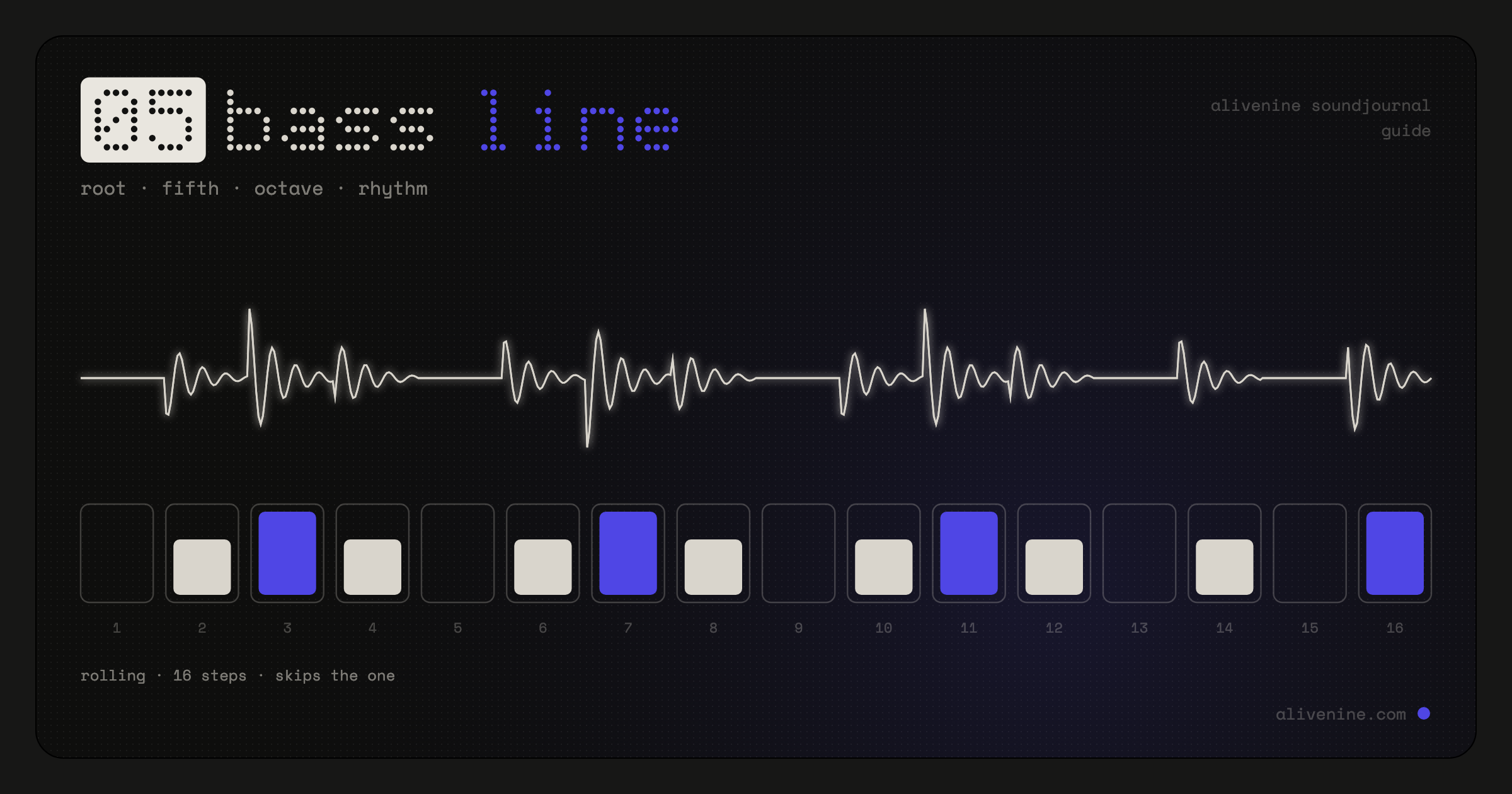
Between the kicks. The bass leaves the beat to the kick and plays the space around it. The classic version is the offbeat bass of house: kick on every beat, bass on every "and". Rolling basslines in techno skip the first sixteenth of each beat and play the other three. Kick and bass never hit at the same time, so the low end stays clean.
With the kick. The bass lands on the kick and holds or decays from there. Hip hop and trap with long 808s work this way, and so do many funk and disco lines. Here the two share the same moment, so they need to agree in pitch and the bass needs to duck or start a little after the kick's attack.
Whatever you choose, accents make the groove. A line of sixteenths at equal volume sounds like a machine. A line where every fourth note is louder and the others are soft sounds like someone playing.
patterns for different styles
The patterns below are sixteen steps long, one bar in 4/4. x is a note, - is a rest, and = holds the previous note. They all work on a single root and get more interesting once you add the fifth and octave from above.
| Style | Pattern (16 steps) | Notes |
|---|---|---|
| House offbeat | --x---x---x---x- | Short notes, root only, kick on every beat |
| Rolling | -xxx-xxx-xxx-xxx | Skips the first sixteenth of every beat |
| Garage | x--x--x---x--x-- | Dotted feel, four to six hits per bar |
| 808 | x=====--x======= | Few long notes, starting with the kick |
| Synthwave | xxxxxxxxxxxxxxxx | Straight sixteenths, octave jump on the third sixteenth of each beat |
| Reese | x=======x======= | Long notes that slide into each other |
In a 120 BPM track, one sixteenth lasts 125 ms. That number helps with note length and with release times on the bass synth: a release longer than the gap to the next note smears the line.
register and length
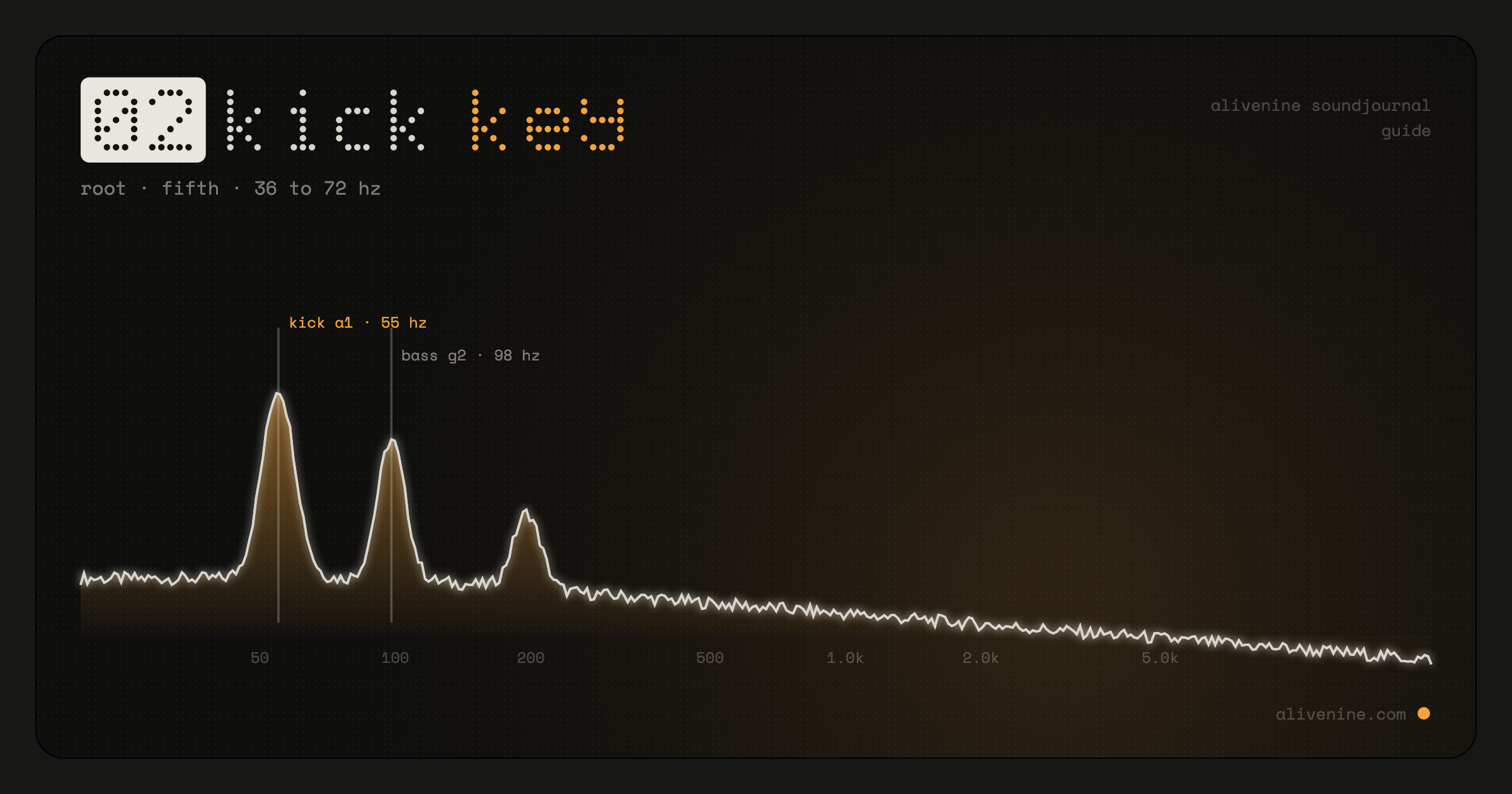
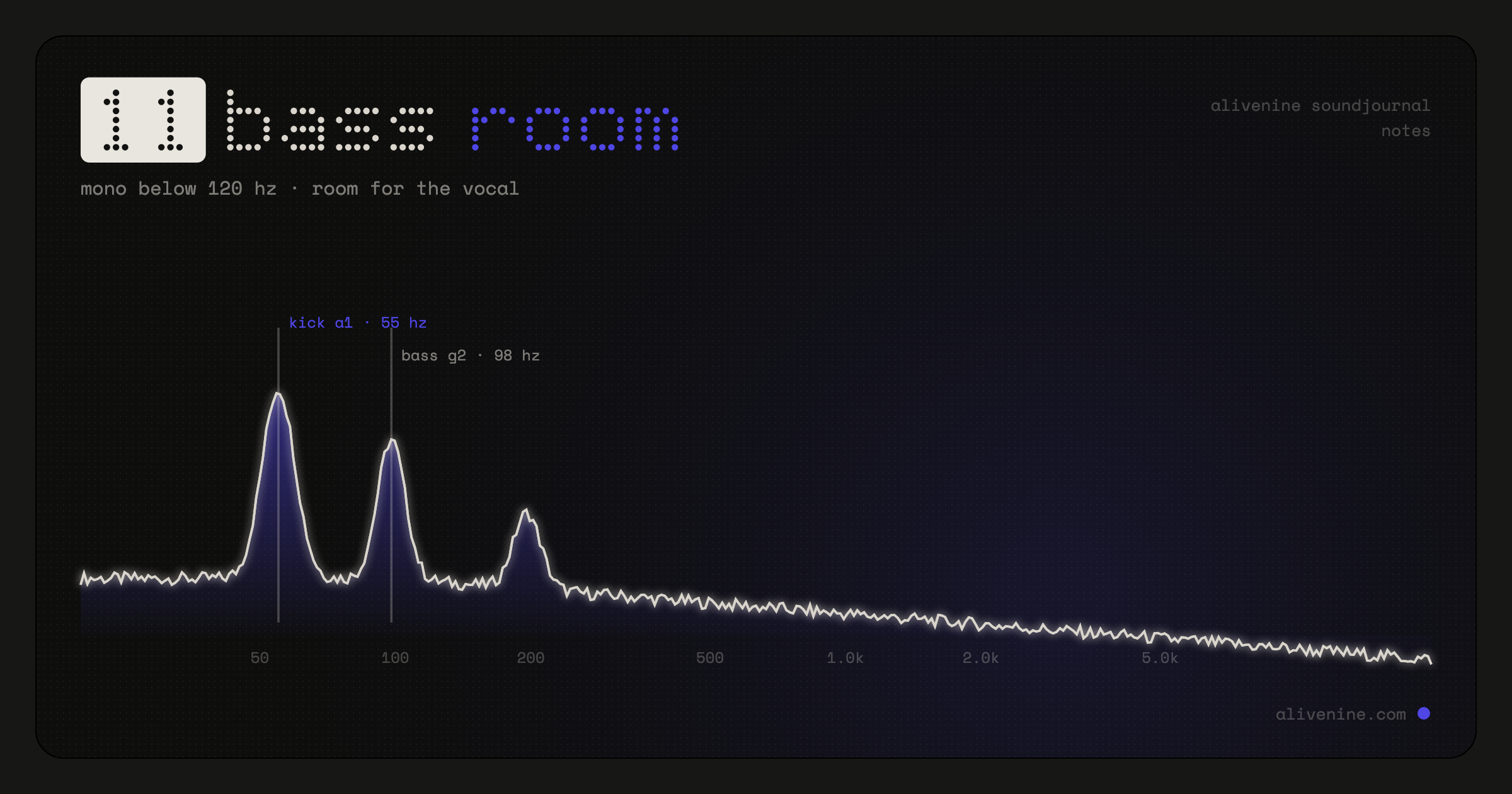
Most basslines live between about E1 at 41 Hz and G2 at 98 Hz, the range of the lower strings of a bass guitar. Below that, small speakers play almost nothing, and on big systems the note gets felt rather than heard. Above it, the bass starts to compete with the low mids of guitars, keys and the vocal.
Note length changes a line more than most people expect. The same notes played short sound tight and funky, played long they sound heavy and smooth. Try halving the length of every note before you change any pitch. In a sequencer, that is the gate.
If a line feels too low on a laptop, don't move it up an octave right away. Add a little saturation or a layer of overtones above 200 Hz instead. The note stays where it is and becomes audible on small speakers.
writing it in ableton or logic
Both DAWs make this quick. A few habits help in either.
- Write the bass right after the drums, before the chords are final. A strong bassline often suggests better chords than the other way round.
- Loop four bars and play the line in by hand, then fix timing. A played line keeps small accents that a drawn one lacks.
- In Ableton, set the clip's scale so the piano roll highlights the notes of your key. In Logic, scale quantize in the piano roll snaps notes to the key.
- Use velocity for accents and the length of each note for groove. Both are faster than reaching for an envelope.
- Duplicate the clip and change only the last bar. A variation every fourth bar keeps a simple line alive for minutes.
making it sit
Keep everything under about 120 Hz mono. Stereo width down there falls apart on a club system. If the kick and bass play at the same time, let the bass duck for about 50 to 150 ms on each kick, either with a compressor fed by the kick or with a volume shape on every beat.
Leave the range between 250 and 500 Hz mostly free. In finished songs we measured, that band carries only 3 to 11 percent of the energy, and it's where the body of the vocal and the snare live. Our note on a bass that leaves room for the kick and the vocal has the full numbers.
And tune the kick to the key, so it doesn't beat against the bass notes that play with it. The root or the fifth of the key, between about 45 and 70 Hz, is the safe choice.
alivebass
alivebass is a synth made only for bass, and it starts with the rhythm. Hold a key and it rolls in time with your track, in Ableton with the song tempo, standalone with its own clock. Pick one of eleven worlds, from roll and garage to 808, reese, acid, synthwave, darkwave and dub, and the sound and the rhythm change together. The patterns behind the worlds were measured from real bass loops.
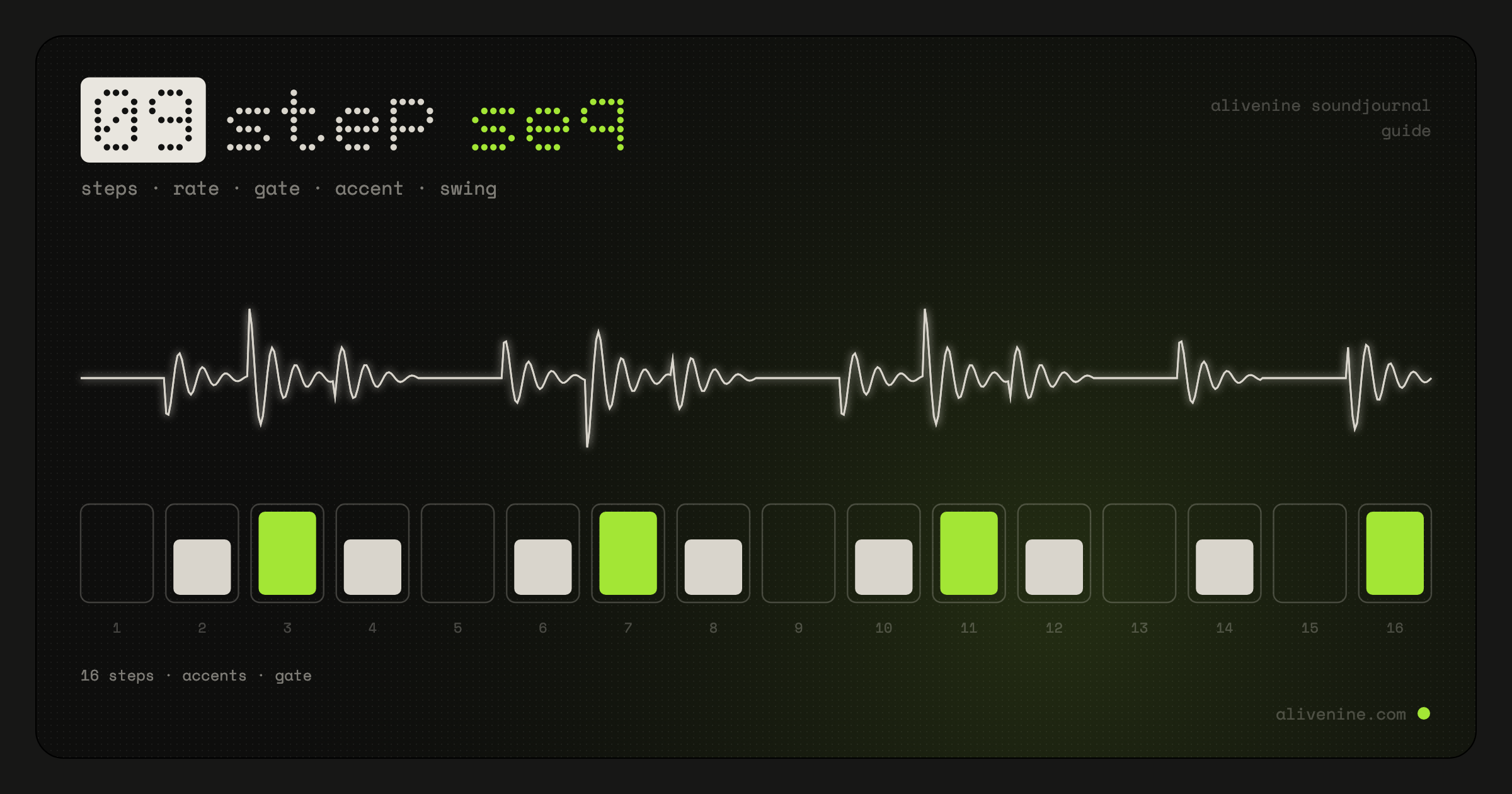
A sequencer at the top of the window fills itself as you play. You click steps on and off, drag them for accent, and move them up or down in the key. One click writes a new line that stays in the style of the world, so a garage line stays dotted and a reese stays long and sliding. Steps can jump an octave or a fifth like an arp from the eighties, and glide makes them slide between steps.
A few modes build the ideas from this guide in. One turns every second step into the root, a pedal with a melody in between. One lets you hold a chord, and the bass plays its lowest note with each step landing on the next chord tone. Another moves the whole line to a different note of the key every bar over four bars, so one rhythm carries a progression.
The mix side follows the same numbers as above. Everything under 120 Hz stays mono and can duck for the kick, on every beat or from a sidechain. The mix fit switch tames the sound for a dense mix with a ceiling on top and room for the voice up to 2 kHz. With the trackpad, you play the notes of the key with one finger, left and right for pitch, up and down for the filter. You can play alivebass in the browser with the real plugin code.
listening tips
- Listen to kick and bass alone for four bars. The groove has to work with just these two.
- Mute the chords and listen to the bass with the vocal. A good line still suggests the harmony.
- Check on a phone. You won't hear the fundamentals, but you should still follow the line.
- Listen at low volume. A bassline that only works loud is usually too long or too dense.
- Compare with a reference at the same loudness, and pay attention to how much space their bass leaves.
faq
How do I start a bassline?
Start with the root of each chord on the first beat of the chord, in a simple rhythm that works with your kick. Once that grooves, add the fifth or the octave, and one approach note before each chord change.
What notes should a bassline play?
Mostly the root, the fifth and the octave of the current chord. These never clash with the harmony. Scale steps and single chromatic notes work as short passing notes into the next chord.
Should the bass play with the kick or between the kicks?
Both work. Between the kicks, as in house and rolling techno, keeps the low end clean. With the kick, as with long 808s, gives weight, but then the bass needs to duck or be tuned to the kick.
What frequency range should a bassline be in?
The main notes usually sit between about 40 and 100 Hz. Add overtones above 200 Hz if it needs to be heard on small speakers, and keep the part under 120 Hz mono.
How do I make a bassline groove?
Use accents and note length. Make some notes louder than others, shorten notes until the line has air, and leave a few steps empty.
How do I make a bassline in Ableton?
Create a MIDI track with a bass synth, set the clip's scale, loop four bars and play or draw the root on the first beat of each chord. Then shape the rhythm around the kick, adjust velocity for accents and shorten the notes until it grooves.
Play alivebass in the browser and hold a key. If your synths above it still feel too clean, how to make soft synths sound analog is next.