· by max
how to humanize drums
Programmed drums sound robotic for three reasons. Every hit has the same level, every hit lands exactly on the grid, and every hit is the same sound. A drummer never does any of that. Humanizing means putting back a little of each, in the places where a player would. This guide goes through velocity, timing, swing and groove, ghost notes and tone per hit, with numbers for each, and shows how it works in Ableton and Logic. alivedrum, the drum synth I built, comes in near the end.
- velocity does more than timing. a hat line with three levels already sounds played.
- keep timing changes small: 2 to 10 ms on hats and percussion, and leave the kick on the one almost untouched.
- move notes with intent, not only at random. a snare 5 to 15 ms late feels laid back, a hat a few ms early pushes.
- ghost notes at about 20 to 50 percent of the main hit fill the space between the backbeats.
- the same sample twice in a row is what the ear catches first. vary pitch by a few cents and the tone per hit.
why programmed drums sound robotic
A drum machine plays what you write, the same way every time. That's not a flaw. A lot of techno, house and electro lives on exactly that repetition. The problem starts when a beat is meant to feel played and still sounds like a grid.
Three things give it away. The level: every hat at velocity 127, so the line sounds like a typewriter. The timing: every note at the exact start of its step, so nothing pushes or drags. The sound: the same sample triggered again and again, so a fast hat roll turns into a buzz. The ear notices the third one even when the first two are fine. This is often called the machine gun effect.
A real drummer changes all three without thinking about it. The hand that plays the offbeat hat is lighter than the one on the beat. The snare sits a little behind when the groove is relaxed. A stick never hits the same spot of the skin twice. Humanizing copies those habits. It doesn't add chaos.
velocity
Start here. Velocity changes more than timing does, and it's the easiest part to get right. Most drum instruments map velocity to level, and many also to brightness, so a softer hit is both quieter and darker.
accents follow the beat
On a sixteenth hat line, a drummer plays the quarter notes strongest, the eighths in between a little softer and the sixteenths softest. Written as velocity, a good starting point looks like this:
| Position | Velocity | What it does |
|---|---|---|
| On the beat (1, 2, 3, 4) | 100 to 120 | Marks the pulse |
| Offbeat eighth (the "and") | 80 to 95 | Drives without competing |
| Sixteenths in between | 55 to 75 | Fills the motion |
| Ghost notes | 20 to 50 | Felt more than heard |
Flip the pattern for styles that lean on the offbeat. In house the open hat on the "and" is usually the loudest hat in the bar.
then a little randomness
On top of the pattern, a random spread of plus or minus 5 to 10 velocity steps on hats and percussion keeps each bar from being a copy of the last. Kick and snare need less, about plus or minus 3 to 5, because they carry the groove and should feel solid. A random spread without the accent pattern underneath doesn't sound human. It just sounds uneven.
In Ableton, the velocity MIDI effect has a random control that adds a random amount to each incoming note. Since Live 11, each note in a clip can also carry its own velocity range and a chance value, so a hat can vary every time the clip loops without any device. In Logic, the Randomizer MIDI FX does a similar job live, and the Velocity Processor can compress or scale the range of a part.
timing and micro timing
Timing is where humanizing goes wrong most often. Random timing alone sounds like a drummer who can't keep time. Timing with a direction sounds like feel.
random timing: small
At 120 BPM, a sixteenth note lasts 125 ms. A random shift of 2 to 10 ms is enough to loosen hats and shakers. Above about 15 to 20 ms on short sounds, the line starts to flam against itself and sounds sloppy. Kick and snare stay tighter, within 1 to 5 ms, or not moved at random at all.
intentional timing: the feel
Feel comes from moving whole groups of notes in one direction, the same way every bar.
- Laid back: move the snare or clap 5 to 15 ms late. The beat feels heavier and slower without changing tempo. Common in hip hop and slow R&B grooves.
- Pushing: move hats 2 to 8 ms early. The beat feels urgent and forward.
- Kick on the grid: leave the kick where it is. It's the reference everything else leans against.
In a clip, most DAWs let you nudge selected notes by a fixed amount or turn off the grid and drag. A simple trick is to put the snare on its own track and use a track delay, which moves every snare by the same number of milliseconds without editing notes.
swing and groove
swing in numbers
Swing delays every second note of a pair. At 50 percent, both notes of a pair are the same length, so it's straight. At about 67 percent, the second note sits on the triplet. Most grooves live between 54 and 62 percent on sixteenths. At 120 BPM, a pair of sixteenths lasts 250 ms. At 58 percent, the second sixteenth lands 20 ms after the straight grid.
The same percentage feels different at different tempos. At 140 BPM, a swing that sounds relaxed at 100 BPM can start to feel hurried. Take a few percent off as the tempo goes up.
the groove pool in ableton
Ableton's Groove Pool applies a timing and velocity template to a clip while it plays. Each groove has these controls, described in the Ableton manual:
- Base: the grid the groove is measured against, for example 1/8 or 1/16.
- Quantize: how much the clip is straightened to that grid first, from 0 to 100 percent.
- Timing: how strongly the groove's timing pattern moves the notes.
- Random: random timing on top. Low values loosen a quantized loop, and each voice gets its own randomization.
- Velocity: how much the groove's velocities affect the notes, from -100 to +100.
A Global Amount scales timing, random and velocity of all grooves at once, up to 130 percent. You can drag any audio or MIDI clip onto the Groove Pool to extract its groove, so a loop from a record you love can lend its timing to your programmed beat. The Commit button writes the groove into the notes for good.
humanize in logic
Logic has a Humanize preset in the MIDI Transform window. It adds a random value to the position, velocity and length of the selected notes, see Apple's list of MIDI Transform presets. You can set the random amounts yourself before applying. If you only want timing, set velocity and length to Thru. Quantize the first note of a region before you humanize, so the downbeat doesn't drift off the bar. For swing, the region inspector offers quantize with a swing amount, and drummer regions have their own swing and feel controls.
ghost notes
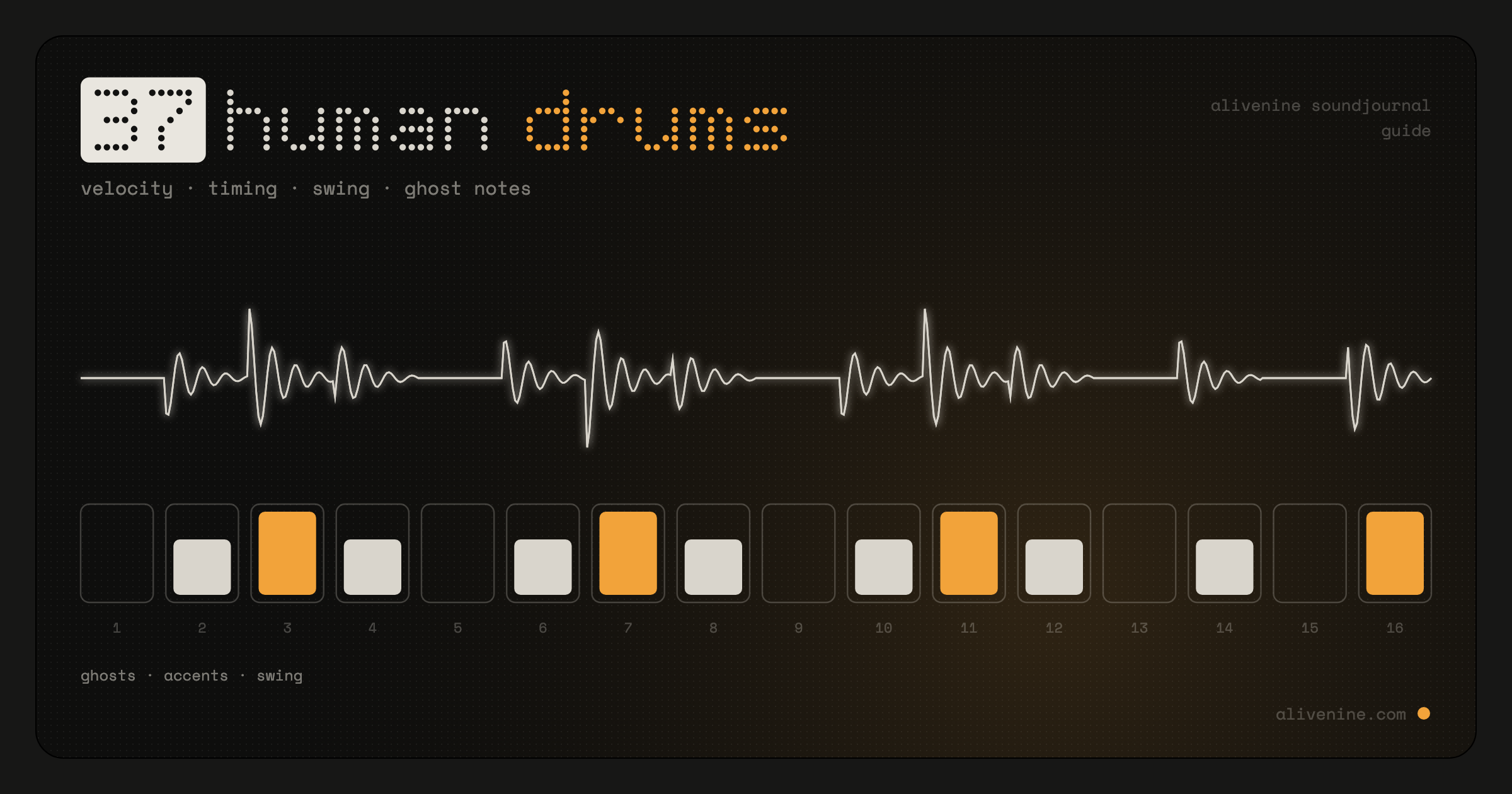
Ghost notes are the very quiet hits between the main ones. On a snare, they're what a drummer's hand plays while waiting for the backbeat. They're barely audible on their own and make a groove feel round and moving.
- Where: on the sixteenths right before or after the backbeat, for example the last sixteenth before beat 2 and the one after beat 3.
- How loud: about 20 to 50 percent of the main hit, so velocity 25 to 60 against a backbeat at 110 to 127.
- How many: one or two per bar. More and the snare line turns busy.
- Which sound: the same snare as the backbeat, just softer. A drum synth or sampler that also darkens on low velocity makes them sit further back.
Ghost notes on kick and percussion work the same way: a soft kick on the sixteenth before the one, a quiet rim before a fill. If a ghost note is clearly audible in the mix, it's too loud.
pitch and tone per hit
This is the part most guides leave out, and it's often the one that matters most on fast hats and rolls. A stick hits a different spot each time, so pitch and tone shift a little from hit to hit.
round robin
Samplers solve this with round robin: several recordings of the same hit, played in turn or at random. Two to four samples per sound are usually enough to stop a roll from sounding like a machine gun. Most drum samplers have a round robin or random mode. If yours doesn't, put two slightly different hat samples on two pads and alternate them in the pattern.
small changes in pitch
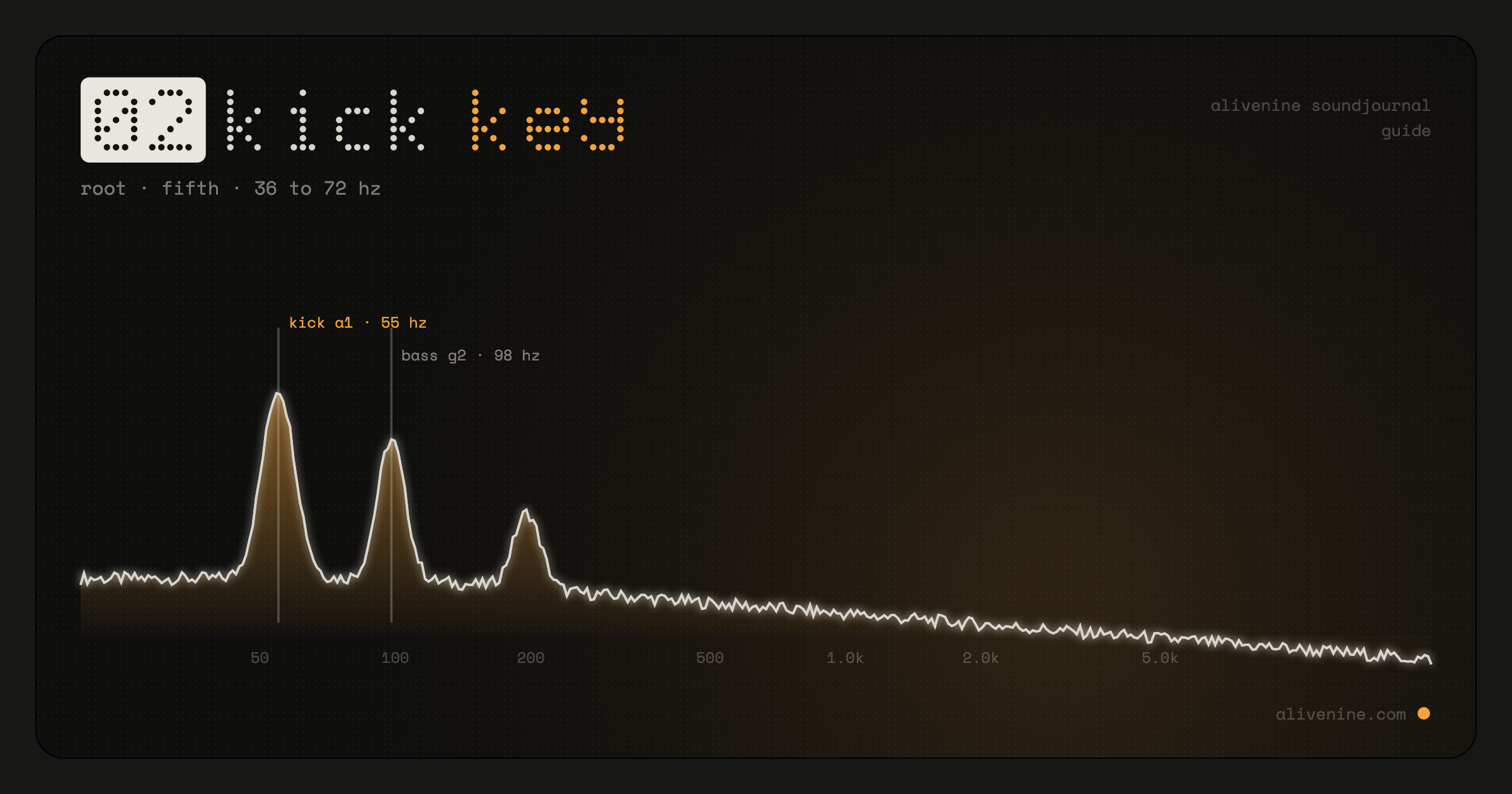
Without extra samples, a random pitch of a few cents per hit does a similar job. 3 to 10 cents is plenty. Above about 20 to 30 cents on a tuned kick or tom, you start to hear a different note. On a kick that is tuned to the key of the track, stay at the low end.
tone and length
A filter cutoff or sample start that moves a little per hit changes the tone without changing level. A decay that varies by a few percent changes how long each hat rings. Link both to velocity where you can, so a soft hit is also darker and shorter. That's what a real cymbal does.
playing it in by hand
The fastest way to sound human is to be one. Play the hats on pads or keys, record, and only then decide how much to fix. Even a rough take has accents and timing that are hard to program.
- Record each part on its own: hats first, then the snare, then percussion. One hand per part.
- Quantize partly, not fully. 50 to 75 percent keeps the feel and removes the mistakes.
- Keep the velocities you played and only fix the timing, or the other way round.
- If a take is close, keep it. The one you played with the track running usually has more feel than the cleaned up one.
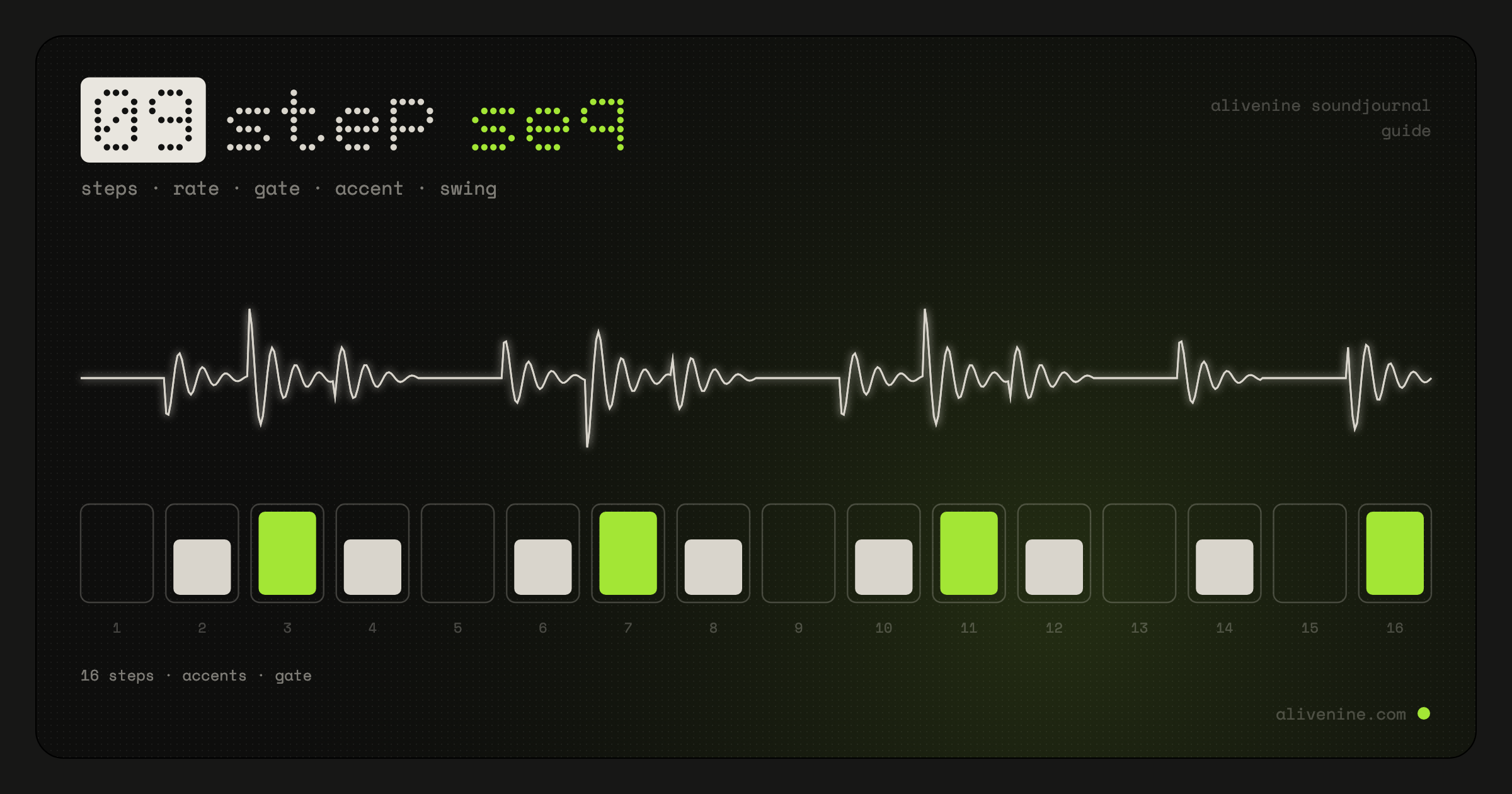
If you program in a step sequencer, you get some of this back with per step velocity, per step offset and probability. The grid stays, and each step gets its own small life.
how much is too much
Humanizing has a sweet spot. Too little and nothing changes. Too much and the beat sounds like a bad drummer. These ranges are starting points for electronic and pop drums at 90 to 130 BPM.
| What | Subtle | Clearly played | Too much |
|---|---|---|---|
| Random timing, hats and percussion | 2 to 5 ms | 5 to 10 ms | Over 15 to 20 ms |
| Random timing, kick and snare | 0 to 2 ms | 2 to 5 ms | Over 8 ms |
| Snare behind the beat | 3 to 5 ms | 8 to 15 ms | Over 25 ms |
| Velocity spread, hats | Plus or minus 5 | Plus or minus 10 to 15 | Over 25 |
| Swing on sixteenths | 52 to 55 percent | 56 to 62 percent | Depends on style |
| Random pitch per hit | 2 to 5 cents | 5 to 10 cents | Over 20 cents |
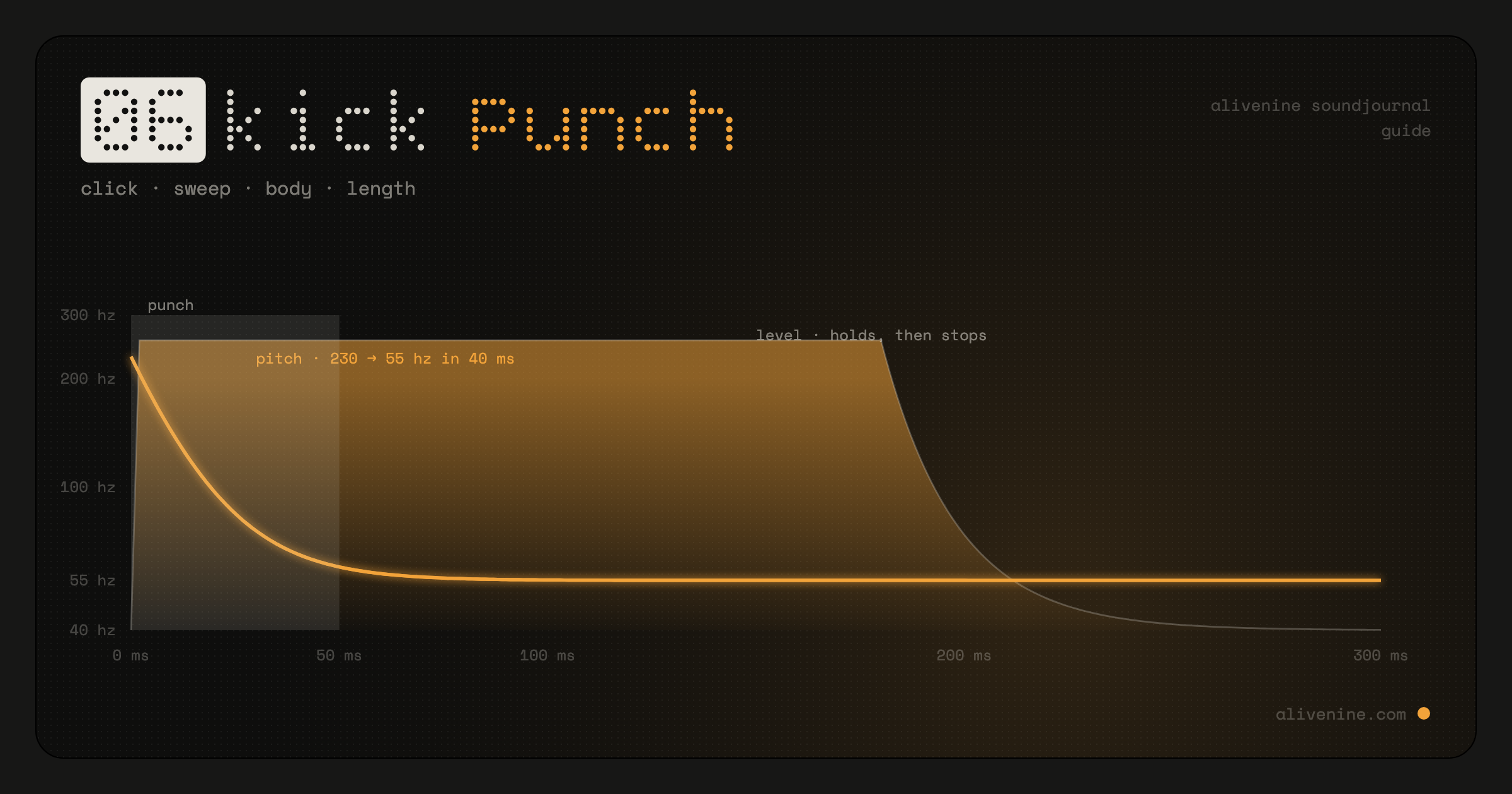
Check it in the track, not solo. A hat that sounds sloppy alone often sounds right under a pad and a bassline. And listen to the kick and snare against the bass. If the low end feels blurred, the kick moved too much. The guide to a punchy kick explains why the first 50 ms of a kick need to stay exact.
humanizing in alivedrum
alivedrum is a drum synth with no samples. Every hit is calculated from the wave up when it plays, so there's no sample to repeat. In the current sound version, each hit already changes a little on its own: pitch by up to plus or minus 0.05 semitones, level by up to plus or minus 0.35 dB, and the tone shifts per hit. Velocity sets how bright the hit is, not only how loud.
vary adds more on top. At 100 percent it moves the pitch of each hit by up to plus or minus 0.12 semitones, the level by up to plus or minus 0.6 dB, and the decay by a small amount. It starts at 30 percent. Those are small numbers on purpose: enough that a four to the floor doesn't sound like a loop, not so much that the kick goes out of tune.
The sequencer has the rest of this guide built in. Each step has three levels, ghost at velocity 60, normal at 100 and accent at 127, plus its own offset from -50 to +50 percent of a step, a chance value, repeats and pitch. Swing goes from 50 to 75 percent, and above 120 BPM it is pulled back automatically, down to 60 percent of the set amount, so the same setting doesn't feel hurried at 140. life lets the hats breathe and drops a kick now and then over four bars, with a small fill at the end. random varies one track at a time: the kick keeps the one and moves or adds a single hit, snare and clap keep the backbeat while quiet ghost notes come and go, hats and percussion get new velocities and a hit more or less.
With trackpad on, the whole MacBook trackpad plays the six pads, in a 3 by 2 grid. The higher you touch in a zone, the louder the hit, from 55 to 100 percent. With rec on, what you play is written into the running pattern on the nearest step, so you keep your accents while the timing snaps to the grid. You can play alivedrum in the browser with the real plugin code.
For sounds outside the drums, alivedrift moves pitch by a few cents with soft randomness instead of an LFO. 3 to 8 cents is the range where a synth or sample just starts to feel alive. There's more in the guide to pitch drift.
faq
How do I humanize drums in Ableton?
Start with velocity: accent the beats, soften the in between notes, and add a small random spread with the velocity device or the note velocity range. Then drag a groove from the Groove Pool onto the clip, keep Random low, and set the snare a few ms late if you want a laid back feel.
How do I humanize MIDI drums in Logic?
Select the notes and use the Humanize preset in the MIDI Transform window. It randomizes position, velocity and length. Keep the amounts small, set the parts you don't want to change to Thru, and quantize the first note of the region first.
How much should I humanize timing?
2 to 10 ms of random timing on hats and percussion, and 0 to 5 ms on kick and snare. Intentional shifts like a late snare can go to 15 ms. Above 20 ms on short sounds, it starts to sound sloppy.
Is velocity or timing more important?
Velocity. An accent pattern on the hats makes a quantized beat sound played. Random timing without velocity changes still sounds like a machine, just a less precise one.
What are ghost notes in drums?
Very quiet hits between the main hits, usually on the snare, at about 20 to 50 percent of the main velocity. They fill the space around the backbeat and give the groove motion.
Why do my drum rolls sound like a machine gun?
Because the same sample plays every time. Use round robin samples, alternate two sounds, or add a few cents of random pitch and a small change in tone per hit.
Velocity first, timing with a direction, tone per hit, and always in the track. Play alivedrum in the browser and turn vary while a pattern runs. Then make the kick hit, with how to make a kick drum punchy.