· by max
how to harmonize vocals: thirds, fifths and backing vocals
A harmony is a second line that moves with the lead and lands on notes that belong to the same chord. Most harmonies in pop, soul and indie are built from very few intervals, mostly thirds and fifths, and the trick is less about theory than about picking the right one for each note and then mixing it quietly enough. Here is how I find the notes, how I record or generate them, and how I set them behind the lead so the song gets wider without getting busy.
- a diatonic third above the melody is the classic harmony. it stays in the key, so some thirds are major and some are minor.
- a fifth sounds open and strong, an octave adds size without adding a new note.
- harmonies sit best well below the lead, usually several db quieter, panned away from the center and with softer consonants.
- singing the harmony yourself gives the most natural result. pitch shifting is fast and good for sketches, stacks and effects.
- tight timing matters more for backings than perfect pitch. cut breaths and hard consonants that don't line up.
the intervals that work
Every harmony is measured from the lead note. Counting happens in steps of the scale: from C, the third is E, the fifth is G, the octave is the next C. This is why a harmony in the key sounds right, every note it uses already lives in the song.
| Interval | Steps in the scale | Semitones | How it sounds |
|---|---|---|---|
| Third above | 2 | 3 or 4 | Sweet, close, the sound of most pop harmonies |
| Third below | 2 down | 3 or 4 | Warm, supports the lead from underneath |
| Fifth above | 4 | 7, once 6 | Open, bright, a little hollow on its own |
| Sixth below | 5 down | 8 or 9 | The same note name as a third above, one octave lower |
| Octave | 7 | 12 | Bigger, no new note, good for choruses |
| Unison | 0 | 0 | A double, makes the line thicker |
The "3 or 4" is the part people stumble over. A diatonic third follows the scale, so it switches between a minor third and a major third depending on where you are. That switching is what keeps the harmony in key. A harmony that keeps exactly four semitones above every note sounds wrong within two bars, because it leaves the scale.
The fifth is the same in almost every place, seven semitones. In a major key there is one exception: from the seventh step, B in C major, the fifth above is F, only six semitones away. That diminished fifth sounds tense. If your melody sits on that note for long, use a third instead.
a worked example in c major
Take a simple line in C major: E, F, G, A, G, E, D, C. The chords under it are C major for the first half and then G and C. Below are the diatonic thirds and fifths above each note.
| Lead | Third above | Semitones | Fifth above |
|---|---|---|---|
| E | G | 3, minor | B |
| F | A | 4, major | C |
| G | B | 4, major | D |
| A | C | 3, minor | E |
| G | B | 4, major | D |
| E | G | 3, minor | B |
| D | F | 3, minor | A |
| C | E | 4, major | G |
The third above works almost everywhere here. Two spots need a look. On the first E, the third G is a chord tone of C major, good. The fifth B is not in the C chord, so a fifth on that note rubs a little. On the D near the end, the chord is G, and the third F is the seventh of G7, which pulls nicely towards the final C. This is the whole method: take the diatonic third as the default, then check each long note against the chord under it, and change the harmony note where it clashes.
Long notes and the last note of a phrase decide how a harmony feels. Short passing notes can rub against the chord and nobody notices. If a long note clashes, move the harmony to the nearest chord tone, even if that breaks the strict third for one note.
parallel, contrary and held notes
There are three ways a harmony line can move against the lead, and each one has its own feel.
- Parallel: the harmony follows the lead at the same interval, a third above all the way. It sounds tight and sweet and is the easiest to sing. Most pop and country harmonies work like this.
- Contrary: the harmony goes down while the lead goes up, or the other way round. It sounds more independent and opens up space between the two voices. Good at the end of a phrase.
- Held or oblique: the harmony stays on one note while the lead moves. A held fifth or root under a moving melody gives the chorus a floor. It is also the easiest harmony for a singer who is new to it.
Backing vocals often mix these. "Oohs" and "aahs" on held chord tones behind a verse, parallel thirds on the hook, and one line that breaks away into contrary motion at the end of the chorus.
Three voices make a full chord. Lead, a third above and a fifth above gives you the root position triad when the lead sits on the root. When the lead moves, keep each backing voice close to where it was, and let it step to the nearest chord tone. That is the same rule keyboard players use for smooth chord changes, and it keeps each line singable.
sing it or shift it
There are two ways to get a harmony onto the record: sing it, or let software generate it from the lead.
| Singing it | Pitch shifting | |
|---|---|---|
| Sound | Its own timbre, breath and timing, sounds like a second person | Same voice, same phrasing, easy to hear as an effect when pushed |
| Speed | Needs a take per voice | Instant, can try many versions |
| Timing | Needs editing to line up | Perfectly in time with the lead |
| Good for | Final harmonies, exposed parts | Sketches, stacks, choirs, effects, deep voices |
When you sing the harmony, put the lead in your headphones, sing along once silently, then record. Learn the line from a piano or synth first if it's hard to hold against the lead. Two or three takes per voice are enough. Comp the best phrases and move on.
Pitch shifting changes the formants along with the pitch unless the tool keeps them. Formants are the resonances of the mouth and throat that make a voice sound like a person of a certain size. A third up without formant correction sounds smaller and brighter. A good shifter keeps the formants where they are, and a formant control lets you push the harmony darker or lighter on purpose, so it sounds like a different singer.
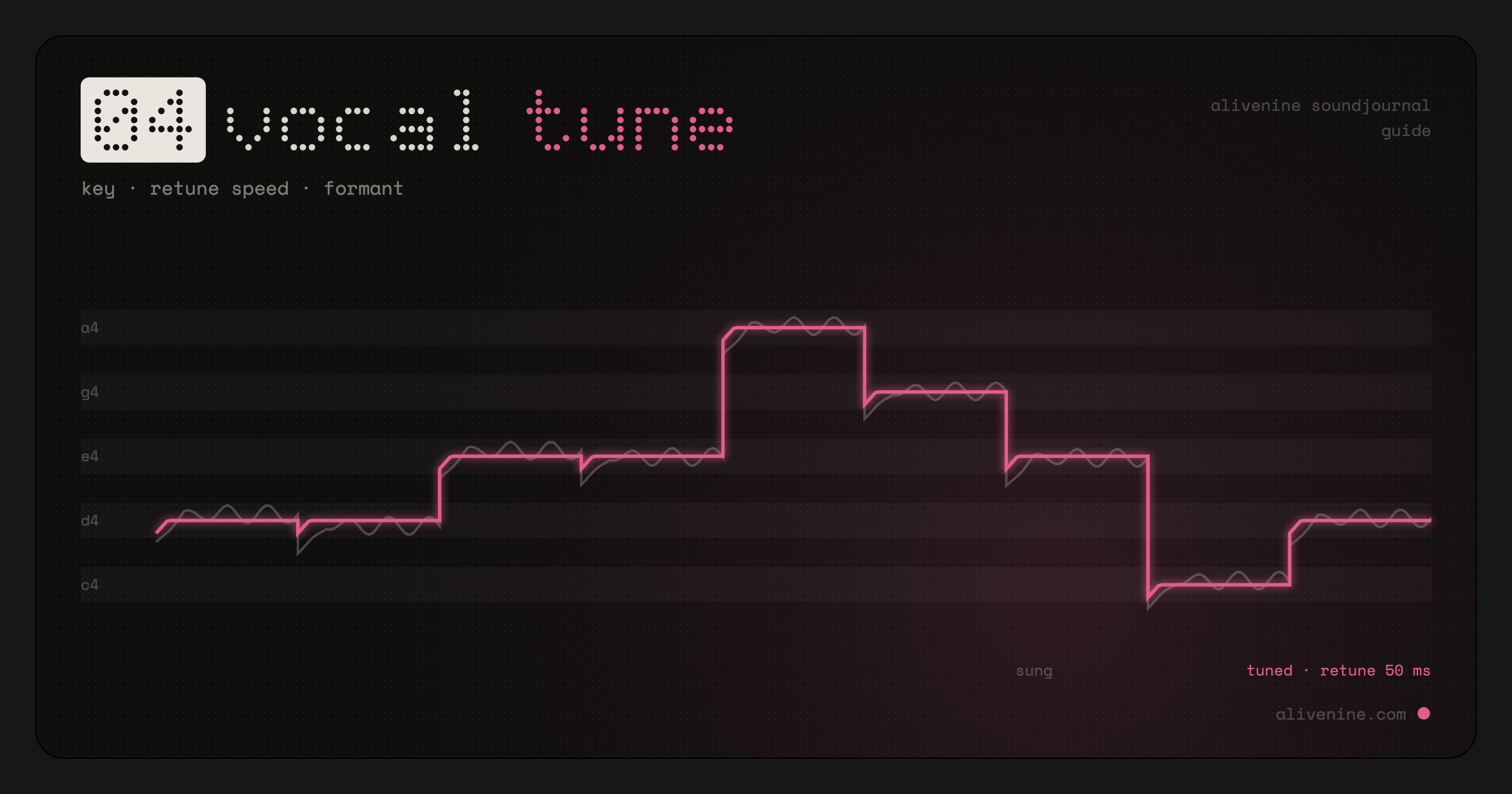
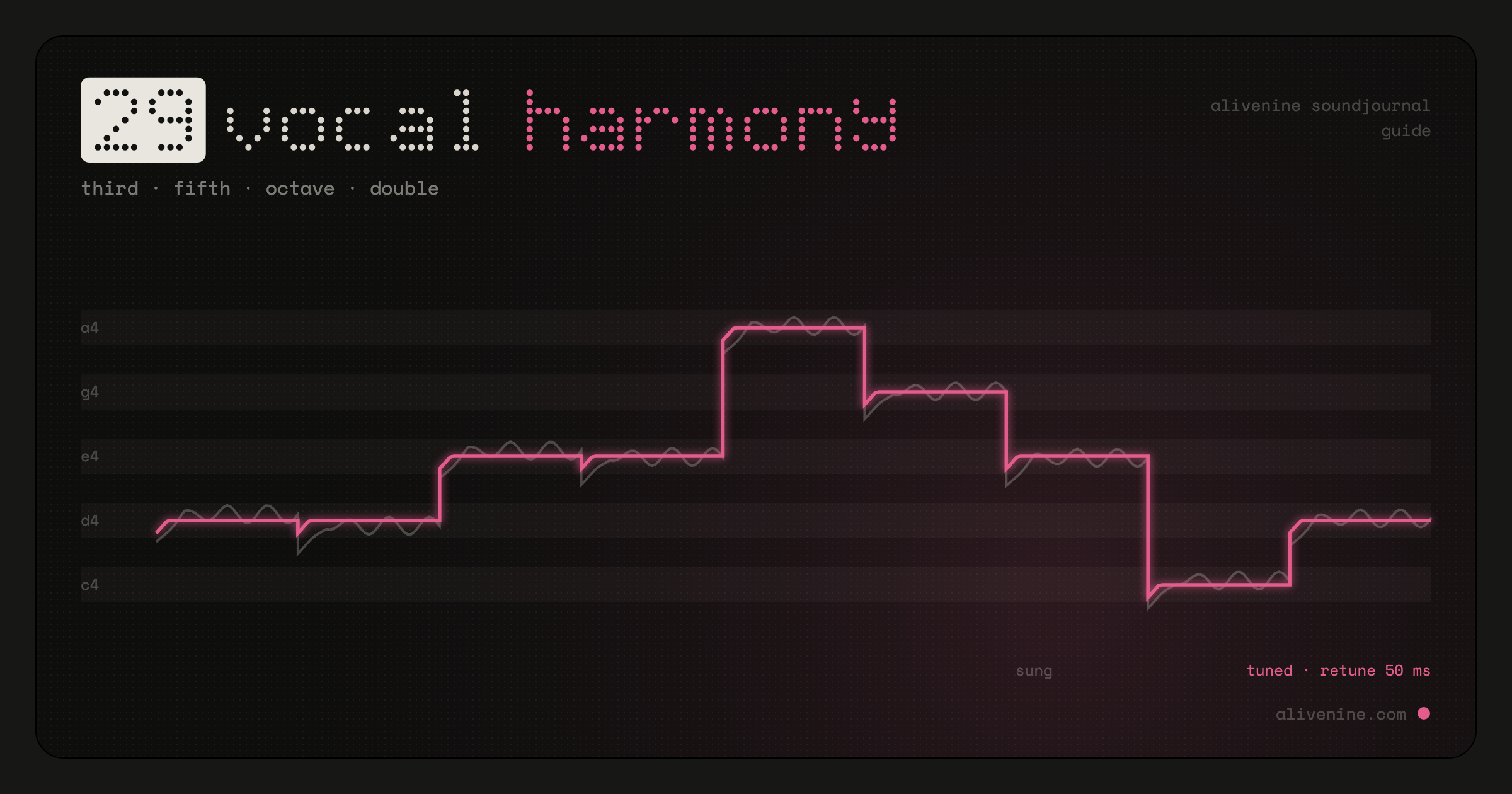
Both ways need tuning. A harmony that is a few cents off against the lead beats audibly, which is a lot more obvious than the same error on a solo voice. Tune backings tighter than the lead, with a faster retune speed. It's one of the few places where a fairly hard correction disappears in the mix.
doubles and stacks
A double is the same line sung again, at the same pitch. It makes the lead thicker and wider, and it hides small pitch errors because two voices average each other. A typical chorus has the lead in the middle and a double on each side, panned hard left and right.
Doubles only work when they are slightly different. A copy of the same take, pasted onto a second track, just makes it louder. A real second take has small differences in timing and pitch, and that is the width. If you have to generate a double, it needs a small detune of a few cents and a delay of a few milliseconds, and those should move over time.
A stack is several voices on top of each other: the lead, two doubles, thirds above on both sides, maybe an octave below. Stacks are what make a chorus sound big. The risk is mud. Every extra voice adds low mids and breath, so stacks need more cutting than a single harmony.
mixing harmonies behind the lead
A harmony that is as loud as the lead turns a song into a duet. The lead should always be the clear center.
- Level: start with the harmony bus 6 to 10 dB below the lead and bring it up until you just hear it as a separate line. Then pull it back a little.
- Panning: the lead in the center. Doubles hard left and right. Harmonies between, for example a third above at 50 percent left and the octave below at 50 percent right. Keep anything low in the stack closer to the center.
- EQ: a high pass on all backings, often between 120 and 200 Hz depending on the voice. A dip in the low mids around 250 to 500 Hz clears the mud of a stack. Less air on the backings than on the lead keeps the lead in front.
- Consonants: one voice should carry the s and t sounds, the lead. De-ess the backings harder, or cut the s at the end of words on the doubles so they don't pile up into a hiss.
- Compression: one compressor on the harmony bus glues the voices into one part.
- Space: a little more reverb or delay on the backings than on the lead pushes them back. Same send, more level.
Timing is the next thing to check. The end of words matters more than the start: a harmony that stops later than the lead sounds sloppy right away. Line up the ends of phrases and the hard consonants, cut breaths on the backings and let the lead keep its own.
The order for all of this is in how to mix a song, step by step, and the tuning settings for the lead are in how to tune vocals in Logic, Ableton and GarageBand.
with the tools in your daw
You don't need a special plugin to make a harmony from a recorded lead. Both big DAWs on the Mac can do it with what comes in the box.
- Logic Pro: duplicate the vocal track, switch on Flex Pitch for the copy and drag each note to its harmony note in the Audio Track Editor. Each note also has a formant control. Apple describes it in Edit pitch and timing with Flex Pitch.
- Ableton Live: duplicate the clip, transpose it and set Warp Mode to Complex Pro. Its Formants control keeps the voice character at 100 percent. This transposes the whole clip by a fixed amount, so a diatonic third needs the clip split where the interval changes. Details in the Live manual chapter Audio Clips, Tempo and Warping.
Both ways work for a few phrases. For a whole song with changing chords, a tool that knows the key and the chord saves you a lot of note dragging.
harmonies in alivevox
I built alivevox because I wanted to build harmony with my own voice while singing, without dragging notes afterwards. It tunes the voice to your key first. Everything else sits on top of that tuning.
- Harmony, scale mode: up to four voices, -oct, -3rd, +3rd and +5th, always in the key you set. The thirds are diatonic, two steps of the scale, so they switch between major and minor like in the table above.
- Harmony, MIDI mode: hold up to four notes on a keyboard and the voice sings exactly those. You sing one line and play the chord.
- Harmony, choir mode: three voices under your melody and one above. With vibe on, they are the notes of the current chord, otherwise a third, a fifth and an octave below. choir makes the low voices darker through the formants, glide sets how they slide between chords, level and spread set volume and width.
- Vibe: opens only the notes of one chord, so whatever you sing lands on chord tones. The seven chords come from the same palette as alivesynth, picked on pads or taken from the MIDI you hold.
- Doubler: two more takes, hard left and right, computed from the same analysis, so they keep the formants and stay in key. amount, width and loose, from tight at 4 cents and 12 ms to loose at 15 cents and 40 ms with more drift.
- Formant: shifts the timbre by up to six semitones either way without changing the pitch.
The tune button sets a stacked choir sound in one move: hard tuning, vibe, choir harmonies, a loose doubler. Reverb then goes on the track. In Logic, alivevox sits under MIDI controlled effects so a MIDI track can play the harmony notes. In Ableton, you send a MIDI track to it with MIDI to. alivevox also comes as a Max for Live device and as its own Mac app, if you just want to sing into it.
If you'D rather write the chords first and sing over them, chords that are never wrong shows how alivesynth lays the chords of the key under seven pads.
faq
What is the easiest vocal harmony?
A diatonic third above the melody. Take the note two steps up in the scale for every note of the lead. It stays in key and works over most chords. Check the long notes against the chord and change the harmony where it clashes.
Should vocal harmonies be a third or a fifth?
A third sounds sweeter and closer, a fifth sounds more open. Many arrangements use a third for the main harmony and add a fifth or an octave in the chorus for size.
How loud should backing vocals be?
Quieter than the lead, usually several dB. A good start is 6 to 10 dB below the lead, then adjust by ear until the harmony is audible as its own line without competing.
How do you pan backing vocals?
Keep the lead in the center, put doubles hard left and right, and spread the harmonies in between. Low voices sit closer to the center, high ones further out.
Can you create harmonies from one vocal track?
Yes. You can duplicate the track and shift the pitch of each note, for example with Flex Pitch in Logic Pro, or use a harmony plugin that knows the key and creates the voices for you.
Why do my harmonies sound out of tune?
Two voices a few cents apart beat against each other, which is easy to hear. Tune backings tighter than the lead, check that the harmony stays in the key, and line up the timing of the phrase endings.
The fastest way to hear the difference between a third and a fifth is to sing one long note and hold a chord under it. Open alivevox and try both.